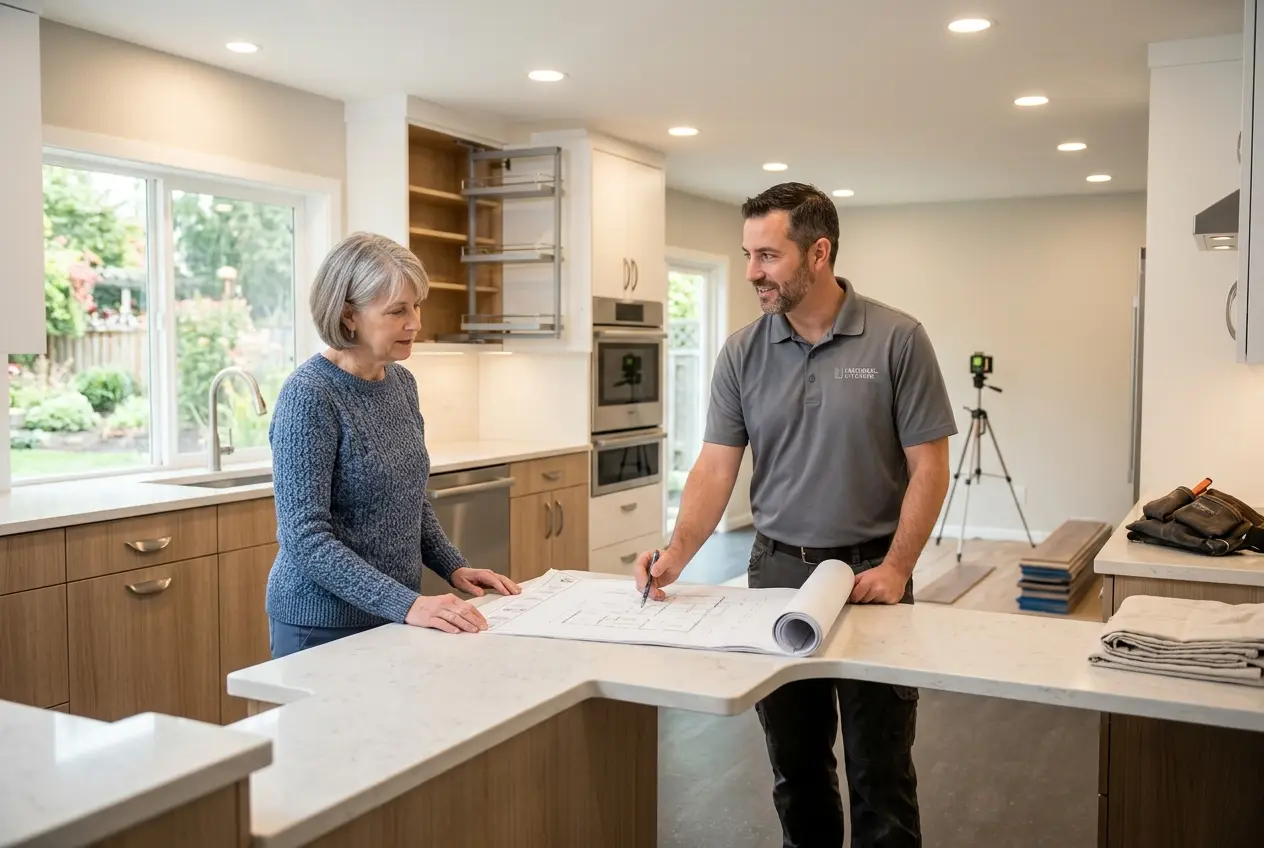
Chicago's iconic two-flats and postwar ranches often present mobility challenges. Our universal design approach reimagines these spaces for comfortable aging-in-place—without compromising style. We lower countertops in Arlington Heights' midcentury kitchens using clever graduated heights that maintain clean lines. For Wicker Park's narrow row houses, we install space-saving appliances with accessible controls.
Every design considers Chicago's specific needs: heated flooring for arthritic joints during winter, task lighting positioned for seasonal affective disorder, and slip-resistant tile that stands up to salted boots. We even create custom solutions like retractable pot racks for wheelchair users in bungalows with limited cabinet space.
Our certified aging-in-place specialists navigate Illinois building codes while preserving your home's character. The result? A kitchen that adapts to life's changes—whether that means accommodating grandchildren in Naperville or recovering from knee surgery in a Gold Coast high-rise.
Every design considers Chicago's specific needs: heated flooring for arthritic joints during winter, task lighting positioned for seasonal affective disorder, and slip-resistant tile that stands up to salted boots. We even create custom solutions like retractable pot racks for wheelchair users in bungalows with limited cabinet space.
Our certified aging-in-place specialists navigate Illinois building codes while preserving your home's character. The result? A kitchen that adapts to life's changes—whether that means accommodating grandchildren in Naperville or recovering from knee surgery in a Gold Coast high-rise.
Our Process
- 01 Step 1: Mobility assessment and future needs consultation
- 02 Step 2: Ergonomic layout planning with physical therapists
- 03 Step 3: Safety feature integration preserving aesthetics
- 04 Step 4: Adjustable systems for evolving requirements
Benefits
- Chicago-specific solutions for narrow stairwells
- Multi-height work surfaces for diverse households
- ADA-compliant designs that feel residential
- Non-slip surfaces tested on icy entryways
Frequently Asked Questions
Can universal design work in my compact condo?
We've perfected space-saving solutions for Chicago's smaller units, like toe-kick drawers and appliances with collapsible handles that meet accessibility standards.
How do you make vintage kitchens wheelchair accessible?
Our patented doorway widening techniques preserve original trim while creating necessary clearance—a method featured in Chicago Landmarks Commission case studies.